

What if the most valuable piece in your jewelry box wasn't a diamond, but a weathered band of silver and sky-blue stone with a story reaching back decades? You’ve likely felt that rush of excitement when spotting vintage turquoise rings at a market, only to hesitate. It’s completely normal to worry about being fooled by "block" plastic or getting tangled in technical jargon about mines and eras. You want a piece that feels authentic and looks incredible, but the fear of making a mistake often stops the hunt before it even begins.
We believe finding a one-of-a-kind treasure should be a joy, not a stressful test. This guide is your insider's map to identifying genuine stones, understanding the beautiful differences between Navajo and Zuni craftsmanship, and knowing exactly what your ring is worth in 2026. We'll show you how to cut through the confusion and shop like a pro. By the end, you'll feel ready to spot those hidden gems at a thrifty price point and add a piece of wearable history to your collection with total confidence. Get ready to turn your next shopping trip into a successful mission for quality and style.
Key Takeaways
- Learn to distinguish between historical eras like the Fred Harvey and Old Pawn traditions to find a piece with true character.
- Master simple DIY tests, like the "cold test," to confidently identify genuine vintage turquoise rings from plastic imitations.
- Discover how to read natural matrix patterns and silver patinas to ensure your jewelry is a high-quality, handcrafted original.
- Get expert tips on styling your estate finds, including how to stack turquoise with modern gold bands for a fresh, contemporary look.
- Understand the vetting process that ensures you're getting a unique, soulful piece of history at a smart, thrifty price point.
What Makes Vintage Turquoise Rings So Special?
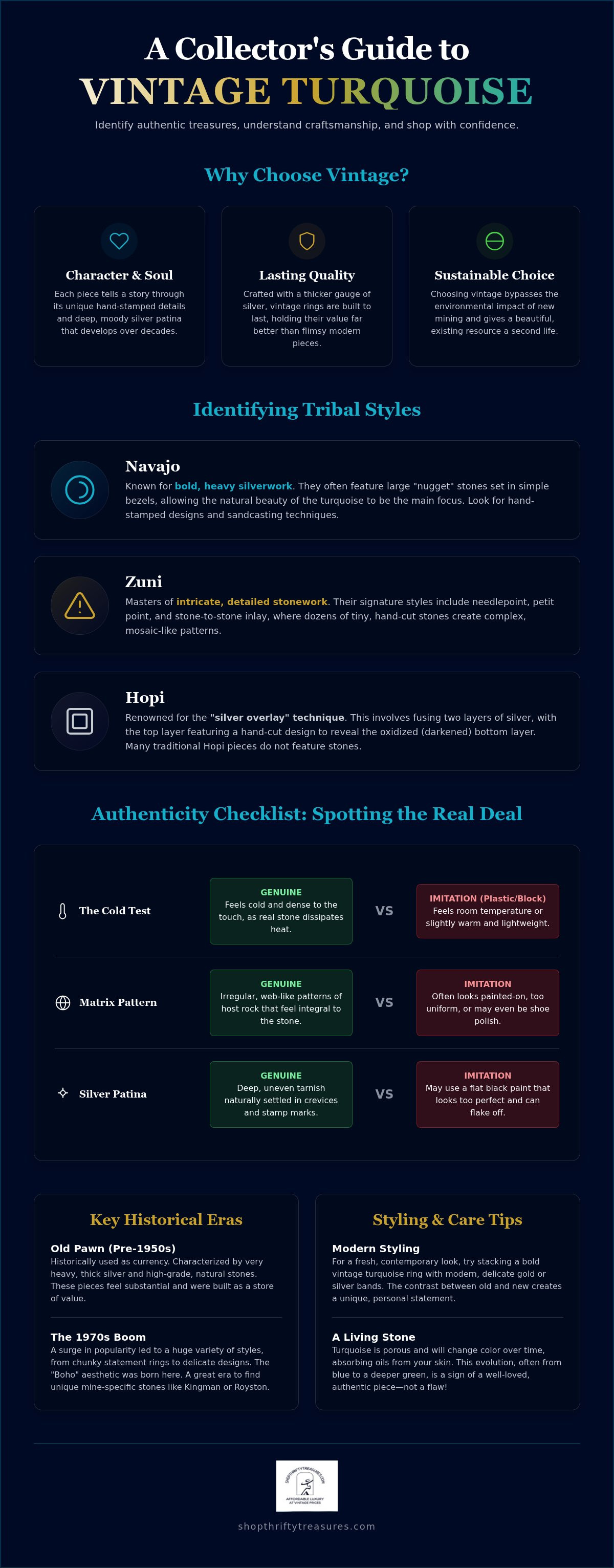
Think of a vintage turquoise ring as a tiny time capsule you wear on your finger. Generally, we define vintage turquoise rings as pieces that have lived through at least 20 years of history. Over those decades, the silver develops a deep, moody patina that you just can't fake in a modern factory. This isn't just jewelry; it's a piece with soul. While modern mass-market rings are often popped out of a machine mold, vintage pieces usually feature hand-stamped details and hand-cut stones. Every hammer strike from the original artisan is still visible, giving the metal a personality that feels alive and intentional.
Choosing these pre-owned treasures is also a fantastic win for the planet. By opting for a vintage ring, you're bypassing the heavy environmental impact of modern mining and giving a second life to a beautiful resource that's already here. Plus, there's the sheer exclusivity of the hunt. When you find that perfect estate piece, you can rest easy knowing you won't bump into anyone else wearing the exact same thing at dinner. It's a one-of-a-kind statement that reflects your own unique style.
The Story Behind the Stone
Turquoise has held a sacred place in the American Southwest for centuries, representing health, protection, and the spirit of the sky. It's a living stone that actually evolves alongside you. Because turquoise is porous, it absorbs natural skin oils and reacts to the air, often shifting from a bright robin's egg blue to a deep, soulful green over the years. This change isn't a flaw; it's a badge of honor showing the ring has been loved and worn. The matrix is the web-like pattern of host rock found within the stone that gives every piece its individual fingerprint and character. For more foundational info, you can check out these Turquoise gemstone facts to see why this mineral is so unique.
Why Vintage Outlasts Modern Trends
Walk into any mall today and you'll find modern silver that feels thin and flimsy. Vintage turquoise rings are a different breed entirely. These older pieces were built to last, often featuring a much thicker gauge of metal that doesn't bend or warp with daily wear. This durability is why antique craftsmanship holds its value so well compared to modern retail brands that lose value the moment you leave the store. There's a special emotional reward in finding a hidden gem at Shop Thrifty Treasures that feels like it was made just for you. We focus on vetting these one-of-a-kind estate finds so you get that high-end character without the high-end price tag. It's about making a smart choice that feels like a personal victory for your collection.
Understanding Eras and Tribal Styles
When you start hunting for vintage turquoise rings, you'll quickly realize that age isn't just a number; it's a specific look. One of the most legendary categories is "Old Pawn." Historically, these pieces served as a form of currency or collateral at trading posts in the American Southwest. Because they were meant to hold significant value, Old Pawn rings are usually heavy, featuring thick silver and high-grade stones. They don't just look substantial; they feel like a piece of history on your hand. Understanding these turquoise quality factors can help you distinguish between a rare, mine-specific stone and a more common modern find.
The 1970s brought another massive wave of popularity for turquoise. This "boom" era produced a huge variety of styles, from chunky statement pieces to more delicate designs. It's during this time that many people fell in love with the "Boho" aesthetic. To really shop like an expert, keep an eye out for mine signatures. A Kingman stone often features a bright blue hue with a dark, web-like matrix, while Royston turquoise is famous for its stunning range of greens and earthy browns. If you're ready to start your own collection, take a look at our latest finds in vintage rings to see these styles in person.
Navajo vs. Zuni vs. Hopi Craftsmanship
- Navajo: These artists are known for bold, heavy silverwork. You'll often see sandcasting techniques and large "nugget" stones that let the natural beauty of the turquoise shine.
- Zuni: If you love detail, Zuni work is for you. They specialize in needlepoint and petit point styles, where dozens of tiny, hand-cut stones are set in intricate patterns. They also excel at stone-to-stone inlay.
- Hopi: Hopi jewelry is famous for the "silver overlay" technique. This involves two layers of silver, with the top layer featuring a cut-out design. Interestingly, many Hopi pieces don't use stones at all, focusing entirely on the silver story.
The Rise of Southwest Tourist Jewelry
Between the 1900s and 1950s, the "Fred Harvey Era" changed the market forever. As the Santa Fe Railway brought travelers west, artisans began creating lighter, "thrifty" designs that were easier for tourists to wear and pack. These pieces are now highly collectible for their nostalgic charm. You'll often find whimsical motifs like thunderbirds, arrows, and crossed logs stamped into the silver. They offer a fantastic entry point for new collectors who want authentic character without the weight of a heavy estate piece.
How to Spot Authentic Vintage Turquoise
Ready to put your detective skills to the test? Finding authentic vintage turquoise rings is a thrilling mission, but you don't want to be fooled by clever imitations. The first and easiest trick is the "Cold Test." Simply touch the stone to your cheek or the tip of your nose. Real turquoise is a natural mineral that holds a chill; it should feel noticeably cool to the touch. If it warms up instantly or feels like room-temperature plastic, it’s likely a resin-based "block" imitation. This quick check is your first line of defense during a busy market hunt.
Next, take a close look at the matrix, which is that beautiful web-like pattern of host rock. On genuine stones, these patterns are irregular and often have slight depth or texture. If the pattern looks too perfect or repeats across multiple rings, it’s a printed design. Be wary of the "thrifty" red flag: if a ring is marketed as a rare estate find but the price seems too good to be true, it’s often a sign of mass-produced reconstituted stone. Real value comes from the stone’s unique story, not just a low price tag.
Real Stone vs. Lab-Created Imitations
It’s helpful to know that not all "real" turquoise is the same. Natural turquoise is untreated and rare. Stabilized turquoise is genuine stone that has been infused with a clear resin to make it harder and more durable for daily wear, which is a widely accepted practice for vintage jewelry. Reconstituted stone, however, is made from turquoise dust mixed with plastic. To get a better look, use a jeweler’s loupe to check for tiny surface pores or bubbles that shouldn't be there. Here’s a quick guide to help you compare:
| Feature | Natural/Stabilized Stone | Synthetic/Block Imitation |
|---|---|---|
| Matrix | Unique, irregular, and varies in depth. | Uniform, repetitive, or looks painted on. |
| Color | Can shift over time or show slight variations. | Perfectly consistent and "flat" in appearance. |
| Feel | Heavy and stays cool to the touch. | Lightweight and warms up quickly. |
Evaluating the Silver Setting
Don't forget to flip the ring over and inspect the band. Most authentic vintage turquoise rings feature hallmarks like "925" or "Sterling" stamped inside. On older pieces, look for signs of hand-tooling. Small, slightly uneven hammer marks or stampings are actually a great sign; they prove the piece was crafted by hand rather than a machine. You can see beautiful examples of these techniques in the Arizona State Museum exhibit on Southwest Native Jewelry. Also, learn to love the patina. A dark tarnish in the crevices of the silver adds value and depth, whereas actual damage like cracks or thin, worn-out bands might require a second thought. Finding that perfect balance of age and durability is what makes the search so rewarding.
Styling and Caring for Your Turquoise Treasures
Ever feel like your outfit is missing a certain spark? That’s where the "Power of One" comes in. A single, bold statement piece can anchor your entire look. While some think vintage turquoise rings only belong at a music festival, they’re actually incredibly versatile. Try stacking your vintage finds with modern gold or sleek silver bands to create a textured, curated vibe. It’s a smart way to blend the old with the new. And don't pack them away when the temperature drops! Turquoise looks stunning against a chunky cream sweater in the winter just as much as it pops against a sundress in July.
Turquoise in the Modern Wardrobe
Think beyond the boho vibe. Imagine pairing a vibrant blue ring with a crisp white button-down and tailored trousers. It’s the ultimate savvy professional move that adds a touch of personality to a minimalist office look. You can also play with textures by wearing your turquoise against leather jackets, silk slips, or heavy knits. These rings aren't just accessories; they’re incredible conversation starters. People will naturally ask about the history of your piece, giving you the perfect chance to share your latest treasure hunt victory. Ready to find your own statement piece? Explore our vetted collection of vintage rings today and see how they transform your wardrobe.
Preserving Your Ring for the Next Generation
You’ve found a beautiful piece of history, so let’s keep it that way. Turquoise is a porous stone, which means it’s a bit like a sponge. It can absorb chemicals that might change its color over time. A good rule of thumb? Your jewelry should be the last thing you put on and the first thing you take off. This simple habit keeps it far away from perfumes, hairsprays, and lotions that can dull the stone's natural luster.
For cleaning, keep it simple. Never use ultrasonic cleaners or harsh chemicals, as these can strip the stone's beauty or damage the setting. Instead, follow these basic steps:
- Cleaning: Use only a soft, damp cloth and mild soap if absolutely necessary.
- Drying: Pat the ring dry immediately with a lint-free cloth.
- Storage: Skip the open trays where silver can tarnish quickly. Opt for soft fabric pouches instead.
Storing your pieces individually protects the silver from the air and prevents the stones from getting scratched by other items in your collection. With just a little bit of love, your ring will remain a stunning heirloom for years to come.
The Joy of the Hunt: Finding Quality at Shop Thrifty Treasures
There's nothing quite like the rush of finding that one perfect piece that speaks to your soul. You've spent time learning about eras, tribal styles, and the secrets of authenticity, and now you're ready for the best part: the reward. Hunting for vintage turquoise rings shouldn't feel like a high-stakes gamble. It should feel like a successful mission where you're the hero who knows how to spot a great opportunity. We take the stress out of the search by doing the heavy lifting for you. Our goal is to make high-quality history accessible and exciting, ensuring that "thrifty" and "excellence" always go hand in hand.
Our curation process is all about the details. We don't just look for pretty stones; we look for craftsmanship that has stood the test of time. We check the silver gauge, inspect the hand-tooling, and verify that every stone has that genuine character we've discussed in this guide. By focusing on estate finds with real personality, we offer you a shortcut to a professional-grade collection. You get the value of a savvy insider without having to spend years mastering technical jargon or mine histories. It's about finding that hidden gem that feels like it was made just for you.
Why a Vetted Collection Matters
Let's be honest; unverified online marketplaces can be a bit of a wild west. You might find a deal that looks good in a blurry photo, but the reality often involves "block" turquoise or flimsy modern silver that doesn't last. Choosing a curated boutique like Shop Thrifty Treasures means you can skip the guesswork entirely. We pride ourselves on being a trusted partner in your jewelry journey. To make your experience even better, we offer a 30-day return policy. This gives you the peace of mind to see the patina and feel the cool weight of the stone in person before making your final decision. It's the smart, risk-free way to shop for quality.
Your Success Story Starts Here
Building a collection of wearable history is a journey that starts with a single smart choice. We've made it easier than ever to find unique, high-quality vintage turquoise rings from the comfort of your home. Whether you're looking for a bold Navajo statement piece or a delicate Zuni design, our ever-changing inventory is full of surprises. We handle every order with care, providing reliable national shipping across the US so your new treasure arrives safely at your door. Don't wait for a special occasion to treat yourself to something extraordinary. You've done the research, you know what to look for, and now it's time to claim your find. Explore our curated vintage ring collection and start your next chapter today.
Start Your Wearable History Today
You’re now equipped with the insider knowledge to spot the real deal and avoid the plastic imitations that often flood the market. Remember that the best vintage turquoise rings are those that tell a story through a deep, moody patina or a unique tribal design. By mastering the cold test and understanding the rich history of eras like Old Pawn, you’ve transformed from a casual browser into a savvy collector. You know exactly how to style these treasures for any occasion and how to care for them so they remain beautiful for decades.
Why wait to find your next favorite piece? At Shop Thrifty Treasures, we take the guesswork out of the hunt. Every item in our collection is carefully vetted by vintage experts to ensure quality and authenticity. We also provide free national shipping on qualifying orders and a 30-day satisfaction guarantee so you can shop with total confidence. Shop Our Curated Selection of Authentic Vintage Turquoise Rings today and discover the soulful value of a one-of-a-kind estate find. Your perfect treasure is just a click away!
Frequently Asked Questions
Is it okay to wear a vintage turquoise ring every day?
You can certainly wear your vintage ring daily, but you need to be mindful of its age and the stone’s porous nature. Turquoise ranks between 5 and 6 on the Mohs scale, making it relatively soft compared to diamonds. It’s best to remove it before washing your hands or applying lotion. This simple habit prevents soaps and oils from dulling the stone’s vibrant color over time.
What does "Old Pawn" turquoise jewelry actually mean?
Old Pawn refers to historical pieces that families used as collateral for credit at Southwest trading posts. If a family couldn't redeem the item, it became "dead pawn" and was sold. These rings are highly prized for their authenticity and heavy silver content. They represent a time when jewelry functioned as a portable bank account, making them some of the most soulful vintage turquoise rings available today.
Why do some turquoise rings have a black or brown web-like pattern?
That web-like pattern is called the matrix. It’s actually remnants of the host rock, like limonite or quartz, where the turquoise originally formed. While some collectors prefer a clear "robin’s egg" blue, others love the character that a dark matrix adds to the stone. These patterns are like a fingerprint; no two are exactly alike, which is a major part of the charm when you're hunting for unique estate finds.
Can vintage turquoise rings be resized by a local jeweler?
Resizing is possible, but it requires a jeweler who understands vintage construction. Turquoise is extremely sensitive to heat and can crack or change color if the stone isn't removed before soldering the band. Always ask if your jeweler has experience with Native American or estate jewelry. Some rings with intricate side-stamping or wrap-around designs might be better left in their original size to preserve their historical value and structural integrity.
How can I tell if my silver turquoise ring is authentic sterling silver?
Start by looking for hallmarks like "925" or "Sterling" stamped on the band. If the ring is very old, it might not have a mark. You can also use a strong magnet; sterling silver is non-magnetic. If the ring sticks, it’s likely a base metal with silver plating. For older vintage turquoise rings, the weight and patina are also excellent indicators of real silver.
Why has the color of my vintage turquoise ring changed over time?
Turquoise is a porous mineral that can absorb oils, perfumes, and even soaps. Over many years, these substances react with the copper and aluminum in the stone, often shifting the color from a bright blue to a deeper green. This shift is actually a sign of age and is often celebrated by collectors as a "living" history. It proves the ring has been worn and loved for decades.
What is the "Fred Harvey Era" in jewelry history?
This era spans from the early 1900s through the 1950s. It’s named after the entrepreneur who partnered with the Santa Fe Railway to sell Southwest souvenirs to travelers. These pieces are typically lighter and feature stamped motifs like thunderbirds and arrows. While originally made as thrifty souvenirs, they are now highly collectible treasures that represent the dawn of the Southwest tourist trade and early commercial craftsmanship.
Are vintage turquoise rings a good investment for the future?
Many collectors view these rings as excellent long-term investments. Since many famous American mines, like Sleeping Beauty or Bisbee, are now closed, the supply of high-grade natural turquoise is shrinking. Authentic vintage pieces also carry a historical premium that modern jewelry lacks. As long as you focus on vetted, high-quality items with unique craftsmanship, your ring is likely to hold its value or even appreciate as these rare stones become harder to find.